
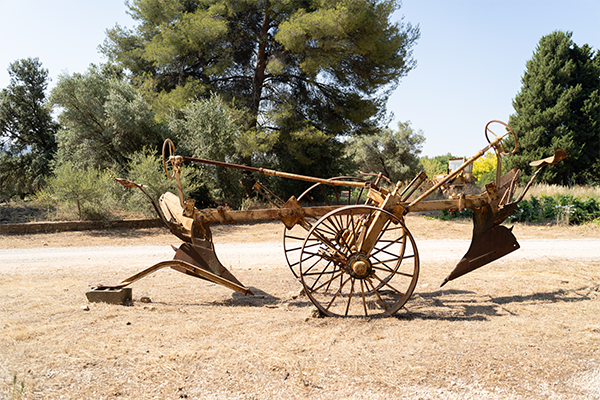
Photo by Pavel Gulea
The human race is inventing the wheel again. The entire world is changed by the invention and deployment of artificial intelligence. AI use is far beyond writing the sports pages of our newspapers now; it’s writing the news about itself. And we, being human beings, pick a place on a linear measure of alignment: I hate AI and will never use it, or I love AI and say bring it on!
For writers, that begins to look like: I will never read a writer using AI for any writing, or I’ll read good text even if no human wrote a word.
Where do you stand on AI?
Two ways to measure the same line: as a person, and as a reader.
As a person
And will never use it.
Bring it on!
As a reader
a writer using AI for any writing.
even if no human wrote a word.
One of my favorite authors announced alignment with the No AI side of these measures. I wanted to ask her, “Do you use spellcheck and grammar checking software? Can we only do research at the library? Can we use a computer to type, or only a typewriter, or a ballpoint pen, or only a quill?”
I’ll ask you: Where do you want to draw your line of resistance?
I also know many children are not being taught writing by handwriting on paper. Writing with either a pen or a quill uses your whole brain, and writing on the computer does not. Cursive writing develops a useful set of brain cells. Please read the article in References (below) because it explains so much about current learning issues.
In Shakespeare’s time there was no copyright on words. In the generations of oral literacy before, if someone liked your story they retold it, using all or some of your words as well as characters and plot. The printers of the early books invented the copyright, protecting the literal copying of their book by another printer. Author copyright came a very long time later.
AI doesn’t copyright what it produces for a prompt. It’s up to me to ask for sources and then check them. It’s always been up to me to determine if the source (TV, radio, book or person) is making up content.
I wrote a poem after the death of my husband; the last line was:
“surrender to the holy gravity of love.”
I thought someone else may have written that line, and now I’m using it as if it were my own words. I asked AI to check it out. Ten seconds later I had several references to parts of the phrase or a similar phrase, but none with my exact wording. I love the words and I can claim them as my own.
Educating Myself about AI
I’ve been attending Cary Richard’s excellent conference on artificial intelligence for writers, editors, and publishers. I attended last year and learned a lot, and the same is true this year. He interviews a series of experts, both as individuals and in panels, on major AI development and issues. Last year I stopped being afraid of AI and selected Claude as my research associate (and I thank the electronic world for it). I tell you when you are reading Claude or me.
At this year’s conference I learned how to use Claude to protect writers from accusations that what we write is written by an AI and not by us. (Notice the irony of using Claude to do this.) The simple solution is to open Claude Cowork, put into that folder all the material I’ve already written, and then in the prompt limit Claude to using only what is in the folder to do its work. No internet searches. I love simple, clean solutions.
My goal for next week is to use Claude Cowork and load years of documents on the Wayfarer’s Journey, which started out as the Hero’s and then the Hero/Heroine’s Journey. The prompt will be written asking Claude to use only my folder material and draft my book. The prompt will indicate chapters and titles. It will tell Claude not to compose a single sentence, but to feel free to make comments or suggestions, just like a human narrative editor would. It will take me far longer to load the material than it will take Claude to shape the book. Then I edit what Claude arranges. Then I’ll ask Claude for a final edit and then a copy-edit. I hope to have that book in hand by All Hallows.
Then I’m going to start another folder and load the 600 pages of my novel based on the Goose Girl fairy tale. First readers said, “It’s really a trilogy.” They were correct. I have extensive notes on the trilogy concept that I will add as well. I’ll ask Claude to include my notes and divide the 600 pages into the three novels I have in mind. I’m asking for a narrative edit, making suggestions for plot and character development, but not to write a single word of narrative.
I’ll let you know how all this progresses. Please don’t stop reading my words because I’m using a non-human editor and saving hundreds of dollars. And, yes, some very valuable and useful people will need to change how they do their current work, as people do any time we re-invent the wheel we are using to get down the road.
Wise Resistance to Change
I amused myself imagining the proverbial cave-dwelling families when a member of the community rolled up the first wheel. People of course fell to arguing about how to use it, and how they would lose the use of their muscles from not carrying heavy loads. The community had already adjusted to the use of fire despite comments like: “Oh, the danger of it spreading.” “Oh, what if we lose our ability to skin animals for the fur to keep us warm.”
I wrote this sentence: “It took a government program to get U.S. farmers to use a steel plow and to contour a hill to prevent runoff. It took bribery for our ancestors to allow electricity onto their farms.” I asked the AI to fact check these comments. Here you go:
AI Research Response
These comments are a mix of historical half-truths and inaccuracies. While they touch on real historical challenges in American agricultural history (namely the Dust Bowl and rural electrification), they misrepresent how these technologies and practices were actually adopted. Here is a factual breakdown of each claim:
“It took a government program to get U.S. farmers to use a steel plow…”
This is historically false. The adoption of the steel plow was driven entirely by private enterprise and free-market demand.
The Problem: When settlers moved west into the American Midwest and Great Plains in the early 19th century, they found that the rich, heavy prairie soil stuck to their traditional cast-iron plows. Farmers had to stop every few feet to scrape the mud off, severely slowing down production.
The Solution: In 1837, a blacksmith named John Deere invented the commercial polished steel plow. The slick prairie soil cleanly slid off the polished steel, allowing farmers to work much faster.
The Adoption: Farmers eagerly bought Deere’s plows on their own accord because it drastically improved their productivity and profits. No government program was needed to convince them to buy a tool that fundamentally solved their biggest operational problem.
“…and to contour a hill to prevent runoff.”
This is largely true. Government intervention was highly instrumental in changing deep-seated farming habits to prevent soil erosion.
The Practice: For generations, American farmers plowed their fields in straight rows, regardless of the topography. When rows went straight up and down a hill, they acted like channels, accelerating rainwater runoff and washing away precious topsoil.
The Intervention: Following the devastating ecological catastrophe of the 1930s Dust Bowl (caused by severe drought and over-plowing), the U.S. government stepped in.
The Program: The federal government created the Soil Erosion Service (now the Natural Resources Conservation Service, or NRCS). The government set up demonstration plots, sent out experts, and actively paid financial incentives to farmers to adopt soil conservation techniques like contour plowing (plowing across a slope following its elevation lines) and terracing.
“It took bribery for our ancestors to allow electricity onto their farms.”
This is a distortion of the reality. It didn’t take “bribery” to convince farmers to want electricity; rather, it required heavy government subsidies and grassroots organizing to circumvent private power monopolies.
The Reality: In the 1930s, nearly 90% of urban Americans had electricity, compared to less than 10% of rural Americans. Farmers desperately wanted electricity, but private investor-owned utility companies refused to run power lines to remote rural areas, claiming it was not profitable.
The Government Act: In 1936, President Franklin D. Roosevelt signed the Rural Electrification Act (REA). The REA provided low-interest federal loans to rural communities so they could form their own non-profit member-owned electric cooperatives.
The “Bribery” Misconception: If anything resembles “bribery” or aggressive persuasion in this era, it was the tactics used by the private utility companies. When they realized the government-backed co-ops were successfully building lines, some private power companies hurriedly built cheap, spiteful lines (often called “skim-milk lines”) to lock down territory or tried to legally block co-ops. Farmers didn’t need to be bribed to accept electricity. They eagerly dug the holes and wired their own homes through local cooperatives because it completely transformed the rural standard of living.
I hope you found using AI to fact check my statements interesting. The early resistance to adopting a change led to better innovation and processes for implementation.
Our early resistance to adopting AI already is leading to better innovation and processes for implementation. Inventors realize the need for guardrails and protections. Creative Commons is sponsoring an event that is just one example of people working hard to set guides and guardrails on October 1st. If it’s past that date when you read this, notes will be available.
Community Voices on AI Attribution as the Norm (Creative Commons)
The Question of Morals
Using or not using AI may be based in a person’s morals rather than the tool. We didn’t ask the wheel for a moral code. We invented rules for the use of cars; they help but don’t prevent disasters caused by human errors. I think we expected this “wheel” to have a moral code built in. We will make laws, require guardrails, or create them ourselves like I am for my writing protocols.
I asked myself these questions:
Does our universe use a kind of AI? Some programming put in place by its Creator? A set of “universal” rules? I’ll leave you to mull that one over.
What is the best action we can take to prevent language skill erosion? My suggestion follows.
Ways to Encourage Responsibility to Language
We believe and act on the premise that we need language to think. It is useful to be able to describe how we feel, what we hope, what makes us angry, and new ideas. Instead of bemoaning AI, expand your own language!
There are many ways to learn and retain words. Games like crossword puzzles use obscure to general usage words. Dungeons and Dragons type games invent whole languages to use while playing.
These are some of the ones I use
Play with words.
Break words up, stick two words together (to get her).
Ask yourself questions
like “Five words to describe this character.”
Look up a word’s history.
Love its long journey to you, decades to millennia later.
Invent new words.
We’re really good at this. Listen to the teenagers of every generation.
A friend of mine picks a new word out of the dictionary every day and challenges himself to use it five different times during the day.
Going deep into any subject (from football to space travel to music to… an endless list) widens your vocabulary.
Read Shakespeare aloud every day: a scene a day, playing all the characters if you’re by yourself.
Read the holy book of your religion, also aloud.
Learning Spanish is widening and deepening my knowledge of English.
Write in longhand. Keep a journal. Handwrite a letter and mail it to someone. Or print a “Shall we go to lunch at 12:00?” note and drop it on your work friend’s desk.
Let’s not leave the shaping of the future world to those who care less than we do about what really matters.
Feel free to comment; I enjoy hearing from you.
All blessings as the season turns.
Leave A Comment